Frugeo Geology Store
Fossiliferous limestone (Bosnia & Herzegovina)
Fossiliferous limestone (Bosnia & Herzegovina)
Couldn't load pickup availability
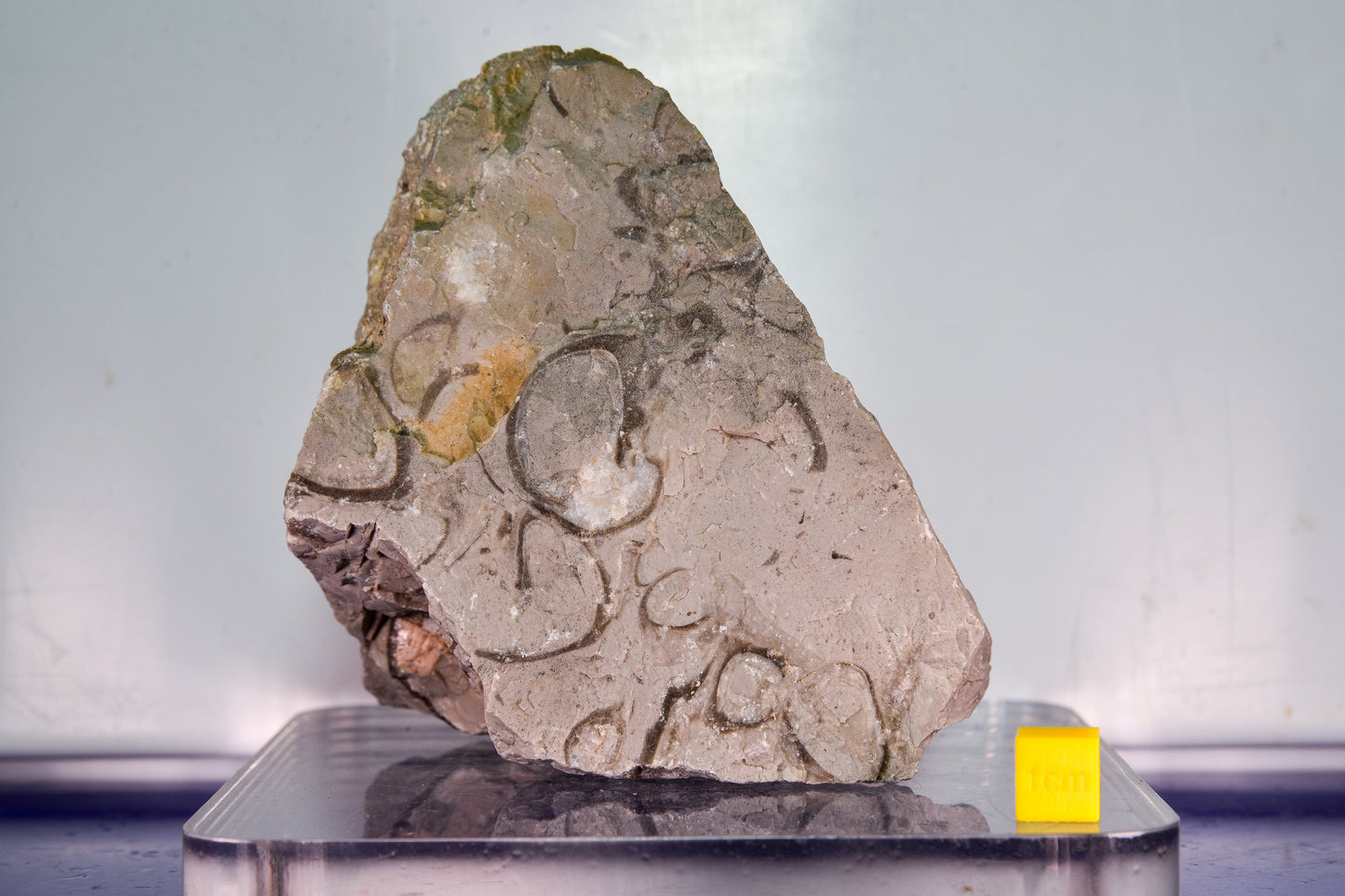
Fossiliferous limestone specimen - Vaganska pećina (Ваганска пећина), Vitorog, Northeastern / Internal Dinarides, Dinaric Alps, Republika Srpska, Bosnia & Herzegovina
This specimen of fossiliferous limestone, a classic sedimentary rock formed in high-energy marine environments. This piece is composed of a fine-grained micritic matrix, typical of the "lithographic" limestones found in the Dinaric Alps. The specimen serves as a natural window into an ancient ecosystem, showcasing distinct cross-sections of prehistoric marine life that have been naturally polished or fractured to reveal their internal structures.
Geologically, the specimen originates from the Mesozoic Era, likely dating to the Upper Triassic or Lower Jurassic periods. They were formed as part of the massive carbonate platforms of the Tethys Ocean, a warm, shallow sea that once covered much of modern-day Europe. Over millions of years, the remains of molluscs and other marine organisms accumulated on the seafloor, were buried under successive layers of sediment, and eventually lithified into the dense, durable limestone seen here. The white crystalline features within the fossils are secondary calcite deposits that filled the voids left by the original shells, a process known as permineralization.
In this specimen, the fossilised remains appear as distinct cross-sections of ancient marine molluscs embedded within a dense limestone matrix. The most prominent features are the thick-walled, oval, and crescent-shaped outlines characteristic of megalodontia bivalves. These large, heart-shaped clams were common in shallow Tethyan waters during the Late Triassic, and when the rock is fractured, their calcified shells appear as these prominent white or dark loops. Additionally, coiled patterns may be seen in that suggest the presence of gastropods, likely high-spired sea snails from the family Nerineidae. The internal structures of these shells have been naturally "sliced" by the rock’s cleavage planes, often revealing a bright white core where secondary calcite crystals precipitated into the hollow chambers of the shells over millions of years.
These specific samples were collected from the Vitorog mountain range in the Northeastern/Internal Dinarides, specifically near the Vaganska pećina (Vagan Cave) in the Republika Srpska region of Bosnia and Herzegovina. This area is a world-class example of karst topography, where the same fossil-rich limestone has been sculpted by water into vast cave systems. The rugged, unpolished state of these rocks preserves the raw aesthetic of the Dinaric Alps, making them excellent study pieces for palaeontology or unique decorative elements for a geological collection.
Origin: Vaganska pećina (Ваганска пећина), Vitorog, Northeastern / Internal Dinarides, Dinaric Alps, Republika Srpska, Bosnia & Herzegovina
Rock type: Limestone
Size: ~10(L) x 7(H) x 5(W) cm (see scale cube), 775 g
Share