Frugeo
Suffolk Flint Nodule (England, UK)
Suffolk Flint Nodule (England, UK)
Couldn't load pickup availability
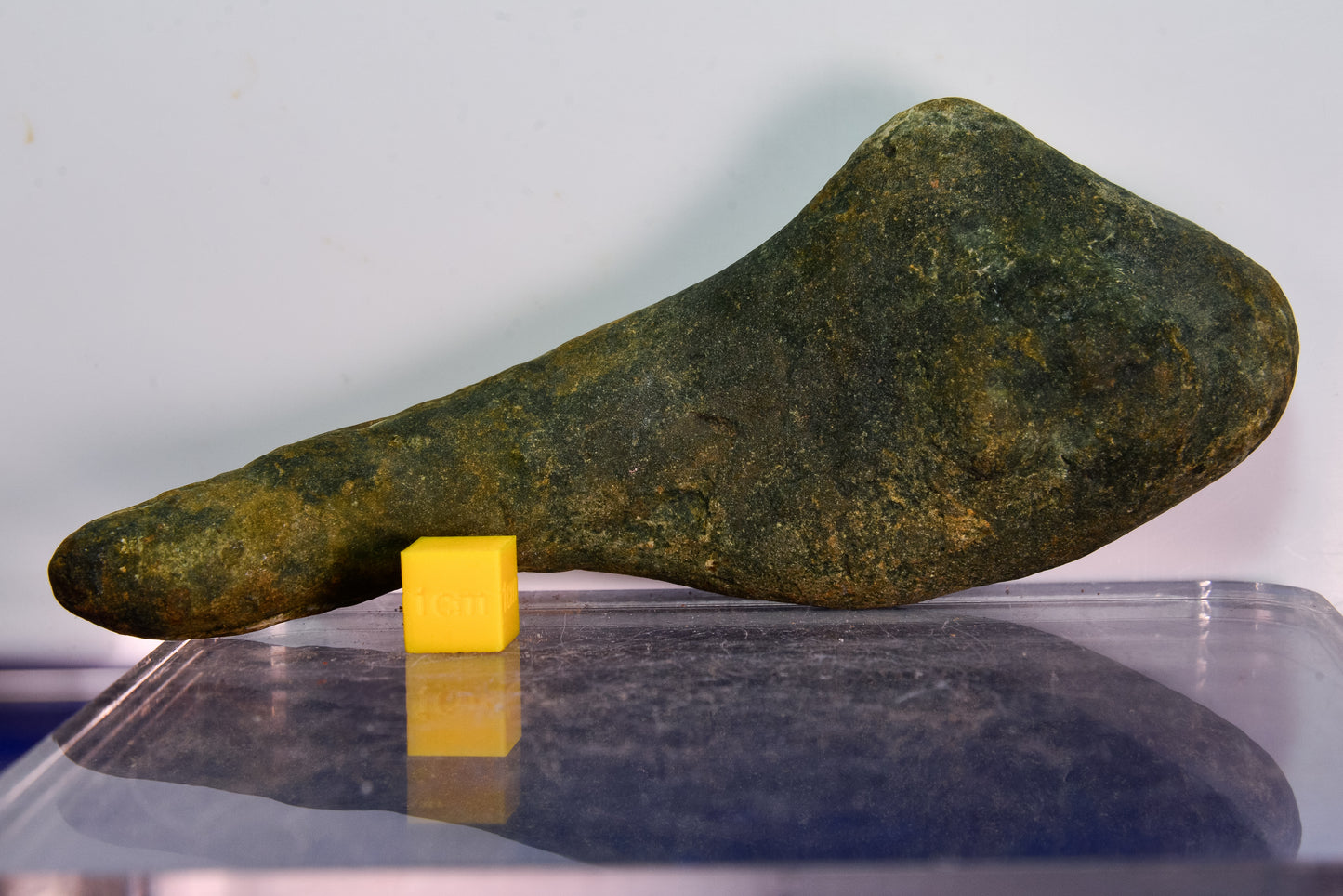
Suffolk Flint Nodule - Shotley, Shotley Marina, River Orwell shore, Suffolk, England, UK
This flint nodule is more than just a stone; it is encapsulated moments of deep time, recovered from the tidal shores of the River Orwell at Shotley Marina, Suffolk. This region of East Anglia is world-renowned for its high-quality flint, a material that defined the technology of our prehistoric ancestors and shaped the very landscape of the English coast.
The story of these specimens began approximately 80 to 90 million years ago during the Upper Cretaceous period. At that time, Britain lay beneath a warm, tropical sea teeming with life. These nodules formed as Silica (SiO2) precipitated out of seawater—often concentrated by the remains of prehistoric sea sponges—and filled the burrows and voids within thick layers of soft, white chalk mud.
Over eons, the surrounding chalk eroded away, releasing these dense, durable nodules. Those found along the Shotley shore have been further refined by the gentle power of the River Orwell. The water has "tumbled" the stones, smoothing their outer cortex (the weathered "rind") and staining it with the rich, earthy tans and oranges characteristic of the Suffolk riverbeds.
Each nodule features a rugged, matte exterior that hides a secret, which is a glassy, cryptocrystalline interior that ranges from smoky grey to "flint-black". These specimens exhibit a famous "shell-like" conchoidal fracture if chipped, which is the same property that made flint the premier material for Stone Age tools and modern fire-starting. Because they formed in the organic burrows of ancient sea creatures, these nodules often take on "zoomorphic" or abstract shapes, making each one a unique natural sculpture.
These flints are ideal for a variety of users and purposes. They are perfect for geology enthusiasts looking for a textbook specimen of biogenic silica or educators demonstrating the properties of the Cretaceous chalk beds. Additionally, they appeal to bushcraft practitioners looking for fire-starting tools, or collectors of "curios" drawn to the tactile, river-worn beauty of the English coast. Ultimately, these Shotley flints serve as a tangible connection to Britain’s ancient maritime past.
Origin: Shotley, Shotley Marina, River Orwell shore, Suffolk, England, UK
Rock type: Flint (mainly SiO2)
Size: ~13(L) x 1-5(H) x 2(W) cm (see scale cube), 166 g
Share